Where to submit
your short film
You can submit a short film to two kinds of places. Festivals, usually entered through online submission platforms, get you screenings and laurels. Distribution platforms get your finished film watched by an audience. Klipist is the distribution route: submit once, and accepted films are streamed free to viewers in all 193 countries of the world. Submission is free, with a one-time fee only if your film is accepted, no recurring cost, and you keep your rights.
Klipist
Film festivals
YouTube / DIY
Most filmmakers do both: festivals for recognition, then distribution to be watched.
Festivals vs distribution
Submitting to festivals and submitting to a distribution platform are not the same thing, and it helps to be clear about which one you want. A festival run, usually entered through an online submission platform, is about recognition: screenings, laurels, press, and the chance to be seen by programmers and other filmmakers. It is a limited window.
Distribution is about being watched. A distribution platform makes your finished film available on an ongoing basis, so people can actually press play long after the festival circuit is over. Klipist is the distribution route, not a festival. Many filmmakers do both in sequence: festivals first, then a home where the film stays watchable.
Free vs paid submission
It is worth being honest about cost, because almost every distribution route asks for something. The usual trade-offs are a revenue share, where the platform takes a cut of any money the film makes; exclusivity, where you agree not to show the film anywhere else; or a fee, where you pay once or on a recurring basis to be listed.
None of these is automatically bad. A revenue share can suit a film built to earn. Exclusivity can come with a bigger marketing push. A one-time fee with no exclusivity keeps things simple and leaves you free to use the film elsewhere. What matters is knowing which one you are agreeing to before you submit.
What to look for in a platform
Short film distribution platforms vary a lot, so it is worth checking the same handful of things on each one before you commit.
- Audience reach. How many people actually watch, and are they the right viewers for your film?
- Rights. Do you keep them, and is the deal non-exclusive so you can show the film elsewhere too?
- Can you remove it. If your plans change, can you take the film down later?
- One-time vs recurring cost. A single fee is easy to reason about. A recurring charge adds up.
- Curation and quality. A curated platform that hand-picks films keeps the neighbourhood good, which helps your film get noticed.
The right platform gets your film watched, on terms you understand, without signing away your rights.
How submitting to Klipist works
Klipist is a curated streaming platform for independent short films. You submit your film, the editors review it, and accepted films are streamed free to watch by an audience in all 193 countries, around 500,000 viewers worldwide. Here is exactly what the deal is, with nothing hidden.
150 pounds
Charged only if your film is accepted. A one-time fee, with no annual or recurring fees.
Non-exclusive
You keep your rights and can show the film elsewhere. It can also be removed later on request.
Curated
Not every submission is accepted. The editors hand-pick the films that go on the platform.
All 193 countries
Accepted films are free to watch for around 500,000 viewers worldwide. No paywall for the audience.
Where your film lives
An accepted film does not sit in a single list on Klipist. It gets a page of its own, and viewers find it in many ways: a moment in Clips, airtime on Klipist TV, hand-picked collections, search, and the Klipist apps on every screen.

Film pageYour stills, story, director and cast, on a page we build by hand.
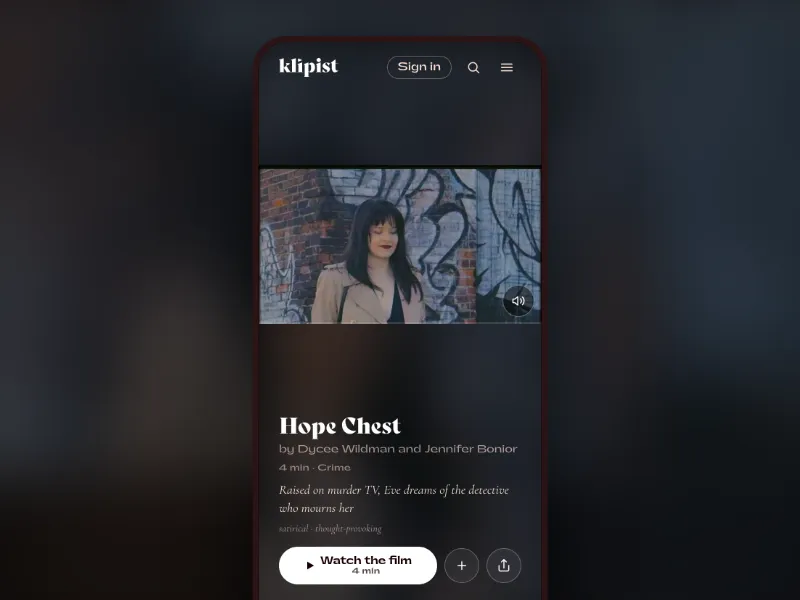
ClipsA strong scene from your film in our feed of moments. One tap plays the whole film.
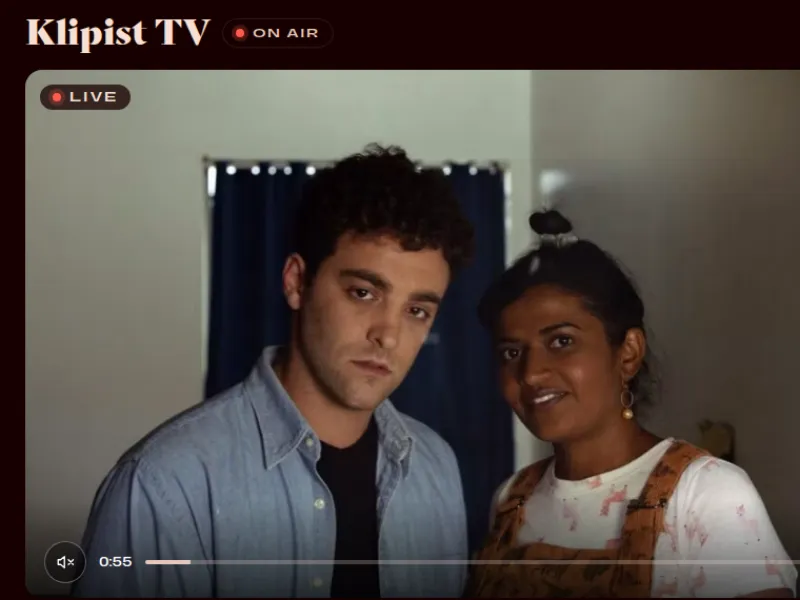
Klipist TVOur channel that is always on. Your film takes its turn in the programme.
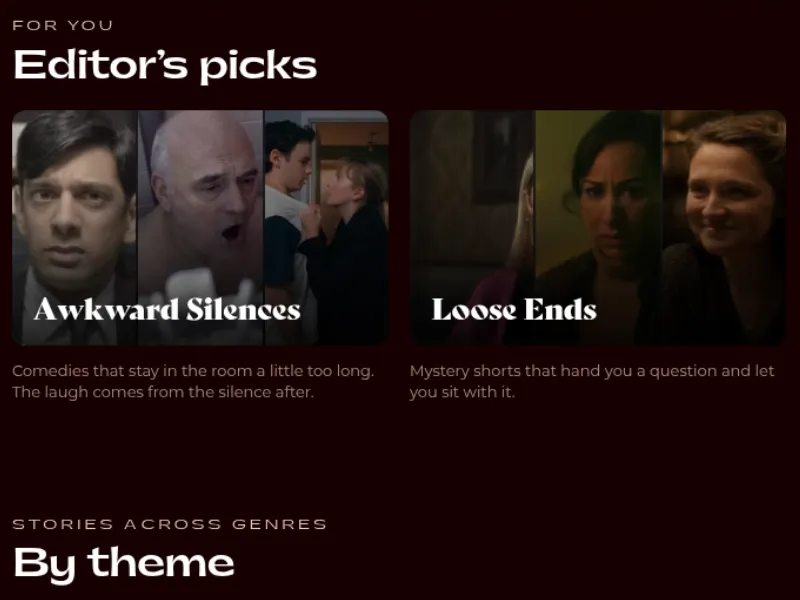
CollectionsHand-picked collections by theme and mood, next to films that feel like yours.
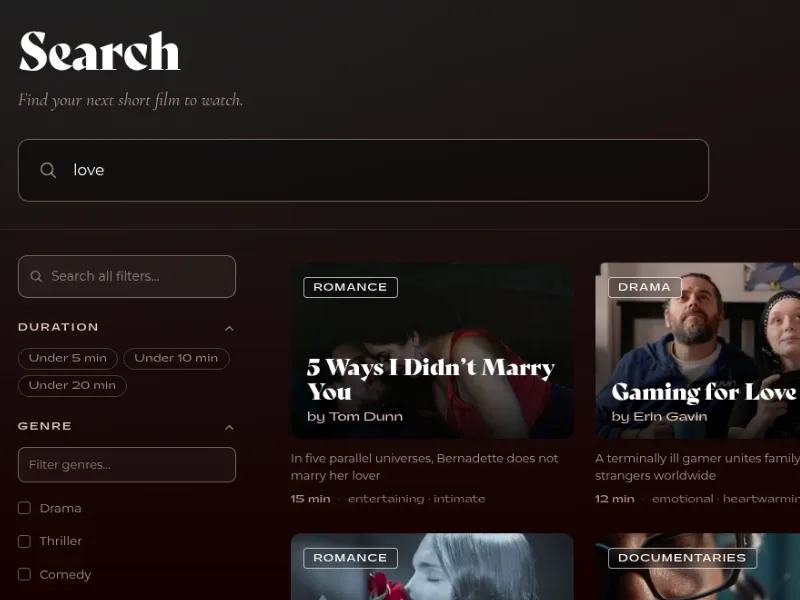
SearchBy its title, your name, its genre, mood or country.
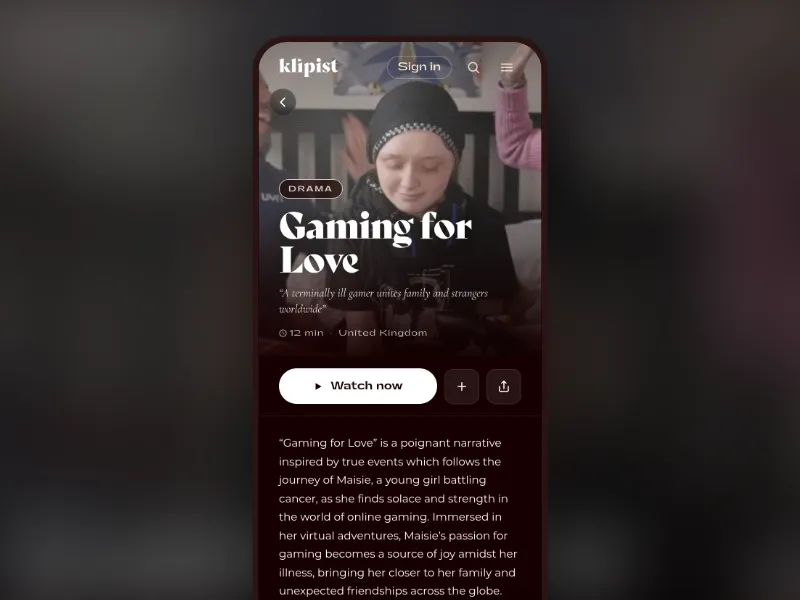
AppsWeb, iOS, Android, Mac and Windows, and the big screen at home.
So the short answer to where to submit your short film online: if you want recognition, enter festivals. If you want your finished film watched on a curated platform while keeping your rights and paying once rather than every year, that is what Klipist is for.
Ready to submit?
One-time fee, no recurring cost, non-exclusive, and free to watch for viewers in all 193 countries.
Frequently asked questions
Where can I submit my short film?
You can submit a short film to two kinds of places, and they do different things. Film festivals, usually entered through online submission platforms, give you screenings and laurels. Distribution platforms get your finished film watched by an audience. Klipist is a curated distribution platform: you submit your short film once, and accepted films are streamed free to viewers in all 193 countries of the world.
How do I distribute a short film online?
Pick a platform whose audience matches your film, decide whether you want it free to watch or behind a paywall, and check the terms before you commit. The terms that matter most are exclusivity, rights, and cost. On Klipist you keep your rights, the deal is non-exclusive, and accepted films are streamed free to a worldwide audience, so the film stays available rather than sitting on a hard drive.
Is it free to submit a short film to Klipist?
Submission is free. There is a one-time fee of 150 pounds only if your film is accepted for distribution. There are no annual or recurring fees. Klipist is curated, so not every submission is accepted.
Do I keep the rights to my film?
Yes. Klipist is non-exclusive, so you keep your rights and can show the film elsewhere at the same time. You can also ask for the film to be removed later.
What is the difference between a film festival and a distribution platform?
A festival screens your film to an audience and a jury for a limited run, which is good for recognition and laurels. A distribution platform makes your film available to watch on an ongoing basis, which is how it reaches viewers. They are different goals, and many filmmakers do both: festivals first, then distribution.
What is Clips?
Clips is the Klipist feed of film moments. For each film we pick one strong scene, and viewers swipe from moment to moment. One tap plays the whole film, so a moment is often how someone finds a short film they would never have searched for.
What is Klipist TV?
Klipist TV is a channel that is always on. It plays Klipist films one after the other, and viewers join whatever is playing, like switching on a TV. Every accepted film takes its turn in the programme, free to watch.
Can my film be part of a collection?
Yes. Klipist brings films together in hand-picked collections by theme and mood, and new films are placed where they fit, so viewers who love one film find the next. There is nothing you need to do.